If you want a luxury home that feels as considered as a well-composed interior, Outpost Estates deserves a close look. In a city full of famous hillsides, this pocket of the Hollywood Hills stands out for its planned layout, layered architecture, and view-driven setting. For design-focused buyers, that mix can be hard to replicate. Let’s dive in.
Why Outpost Estates stands apart
Outpost Estates is not just another hillside neighborhood in 90068. It is a planned enclave that opened in 1925 and today includes roughly 450 homes across 16 streets, according to the neighborhood association. Its boundaries are generally placed at Mulholland Drive, Franklin Avenue, Runyon Canyon Park, and the Hollywood Heights and Hollywood Bowl edge.
What makes that history matter to you as a buyer is the way the neighborhood was conceived from the start. City planning materials describe curving streets that follow the natural contours of the canyon, along with grading for drainage, paved roads, underground utilities, decorative street trees, and lampposts. Those early planning choices still shape how the neighborhood feels today.
Design buyers often value coherence
For buyers who care about architecture, Outpost offers something increasingly rare in Los Angeles: a sense of design continuity. The historic core, especially in the lower portion of the original tract, is known for a concentrated collection of homes from roughly 1925 to 1930. SurveyLA identifies this area as a residential historic district with a strong Period Revival identity.
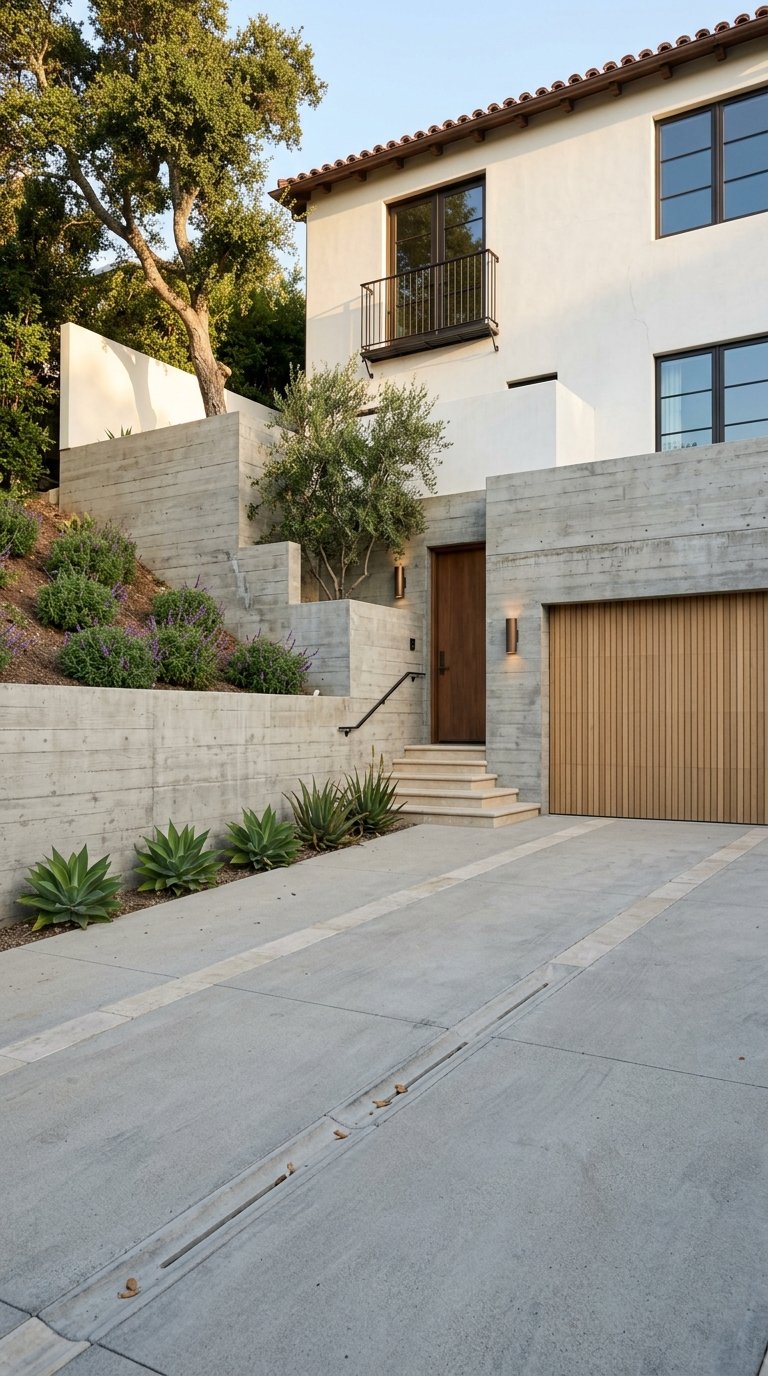
You see that character in Spanish Colonial Revival and Mediterranean Revival homes with rough plaster walls, red clay tile roofs, arched openings, carved doors, decorative tile, and wrought iron details. Instead of feeling random, many of these homes speak a similar visual language. That can create a more unified streetscape and a stronger sense of arrival.
The lower tract has the strongest historic cohesion
If architectural consistency is high on your list, the lower section of Outpost Estates may deserve extra attention. SurveyLA notes that building restrictions changed in the 1930s and 1940s, so the earliest cohesion is most visible in the lower part of the original development. In practical terms, that means not every street will offer the same degree of period continuity.
That is not a drawback for every buyer. It simply means you should approach Outpost as a layered design district, not a frozen-in-time museum piece. Depending on your taste, that variety may be part of the appeal.
Outpost is more layered than many buyers expect
A common mistake is to think of Outpost as only a Spanish Revival neighborhood. The historic identity is real, but the current housing mix is broader. Recent neighborhood reporting has highlighted restored 1930s estates, 1950s mid-century homes, architectural retreats, and newer contemporary hillside residences.
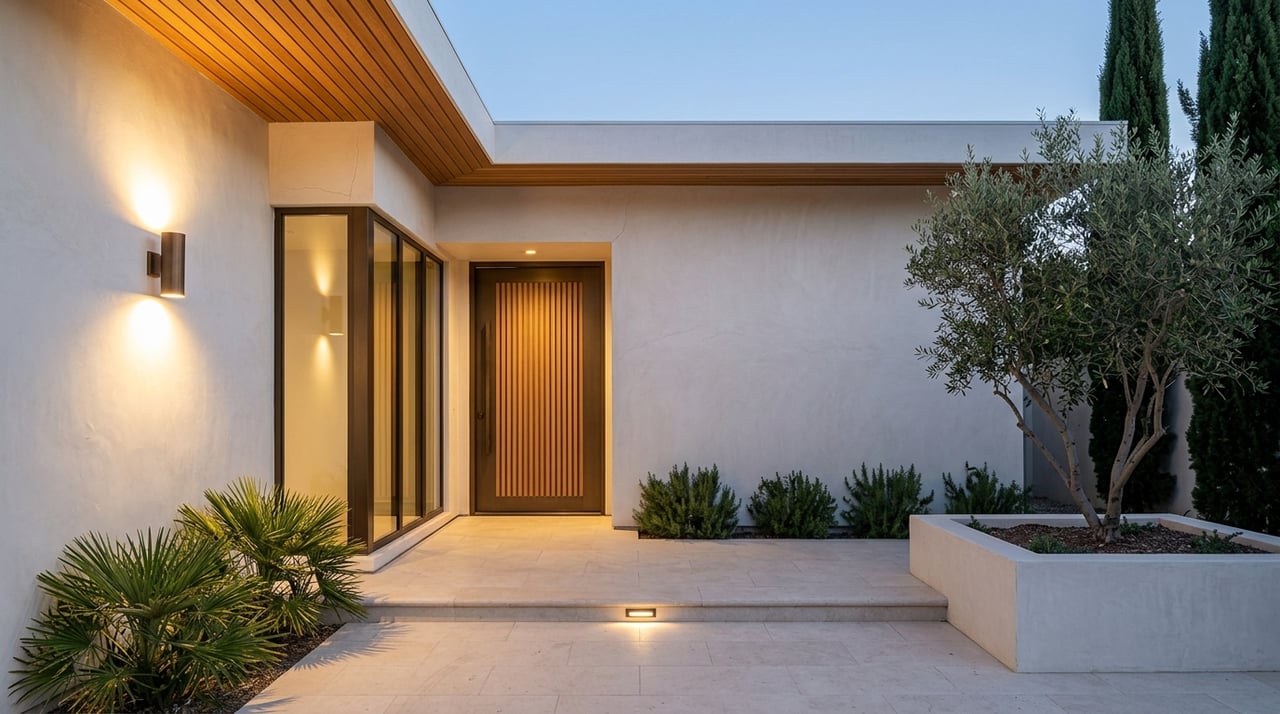
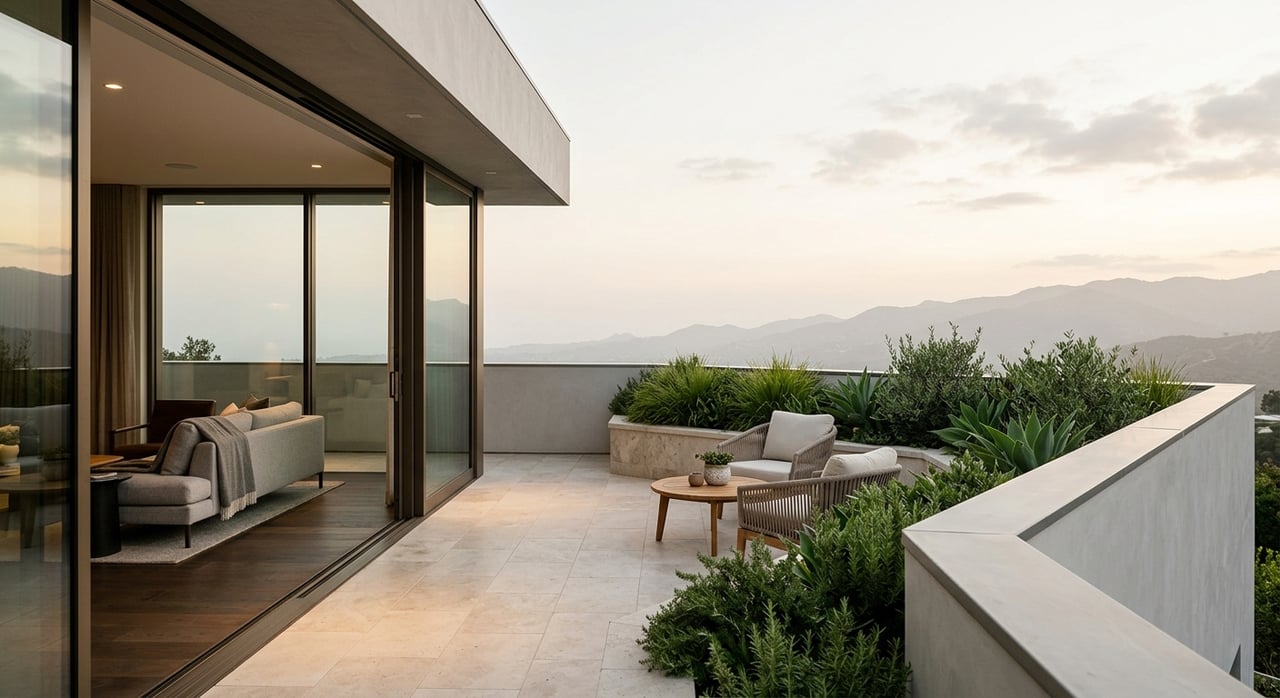
That wider mix gives design-focused buyers more than one entry point. You may find a classic revival home with original detailing, a mid-century property with strong lines and outlooks, or a contemporary residence that leans into glass, terraces, and long-range views. In other words, Outpost can work for buyers who want pedigree, but also for those who want a more edited, modern expression of hillside living.
Period homes still shape the neighborhood identity
Even with a broader mix today, the early revival core still gives Outpost much of its personality. That matters because neighborhood character often comes from what is repeated, not just what is exceptional. Rooflines, walls, landscaping, and street rhythm all contribute to the visual experience.
For a buyer, that means your home is part of a larger composition. If you value context and setting, Outpost tends to reward that way of thinking.
Hillside lots influence how homes live
In Outpost Estates, architecture and topography work together. The neighborhood sits in a narrow canyon on south-facing slopes, and that creates a very specific kind of lot geometry. Homes often respond to grade changes with terraces, layered outdoor spaces, and privacy-oriented planning.
City survey materials point to examples like the Dolores Del Rio Residence, which sits on an irregular terraced parcel and uses a walled front garden, side-street garage access, patios, and multiple outdoor rooms. That example helps explain a bigger truth about Outpost: hillside constraints often produce thoughtful design solutions. For buyers who appreciate layout and siting, that can be a major advantage.
Privacy often comes from the land itself
In many luxury neighborhoods, privacy comes from lot size alone. In Outpost, privacy can also come from the shape of the terrain, retaining walls, gardens, elevation changes, and the way homes are positioned on winding streets. This can create a more sheltered feel without losing openness to light and views.
That balance matters if you want a home that feels tucked away but not disconnected. It is one of the reasons Outpost continues to appeal to buyers who want both calm and convenience.
Views are central to the lifestyle
In this part of the Hollywood Hills, views are not a bonus. They are often part of the core value. Neighborhood and city materials emphasize preserved natural views and underground utilities, while recent neighborhood reports describe outlooks that can include city, canyon, treetop, ocean, and Hollywood Sign vistas.
For a design-minded buyer, that affects more than resale appeal. It influences where you place living spaces, how outdoor rooms are used, and what kind of daily experience the home delivers. In Outpost, the setting often becomes part of the architecture.
Indoor-outdoor living feels natural here
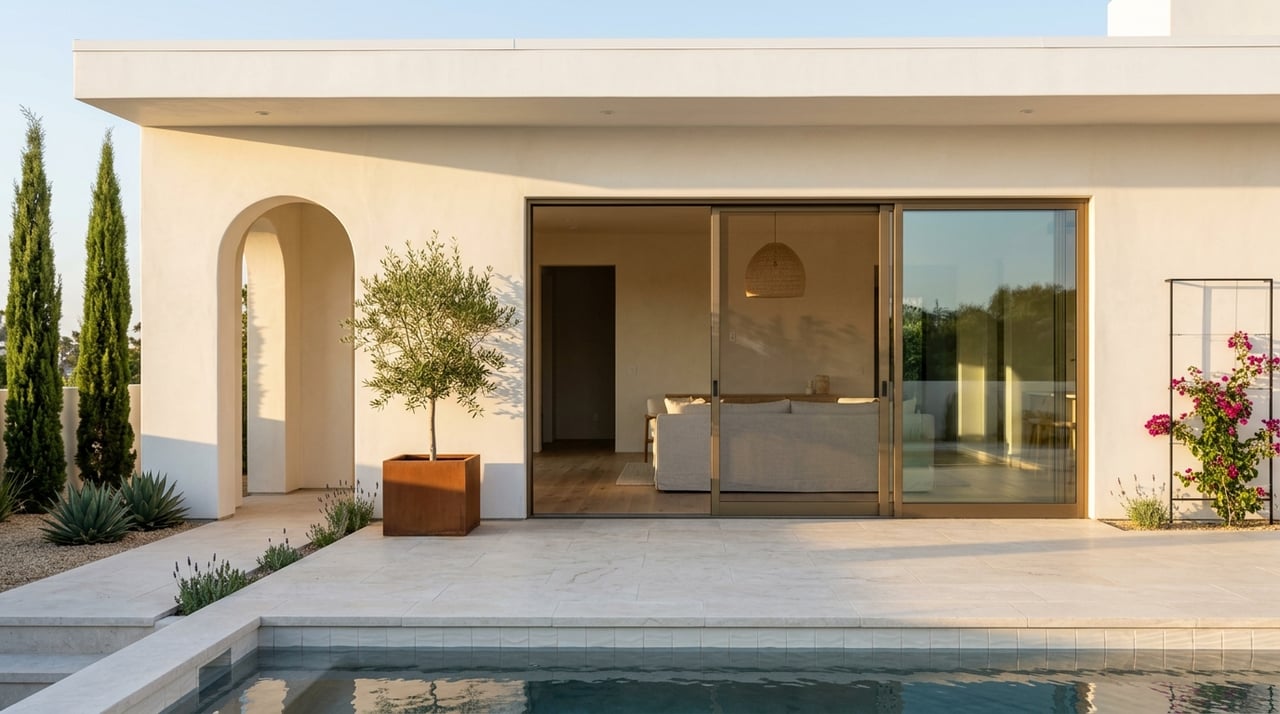
Because many homes are built to respond to slopes and views, patios, terraces, gardens, and layered exterior spaces often play a meaningful role. That is true in period homes as well as later architectural properties. The best houses here tend to make the site feel intentional.
If you are searching for a luxury property where design is tied to light, air, and outlook, Outpost often checks that box. It offers the kind of indoor-outdoor living buyers expect in Los Angeles, but with a more rooted neighborhood identity than some newer hillside pockets.
Location adds everyday convenience
Outpost Estates has a tucked-away quality, but it is not isolated. The neighborhood association points to its proximity to Runyon Canyon, the Hollywood Bowl, The Ford, and Hollywood Boulevard. City historic context materials also note that the subdivision was originally marketed for its hillside setting and access to Hollywood’s business, shopping, and entertainment districts.
That balance is a big part of the draw today. You can enjoy a more private residential setting while staying close to major cultural and lifestyle destinations. For many buyers, especially those relocating to Los Angeles, that combination is easier to understand once you experience the neighborhood in person.
How Outpost compares nearby
Design-focused buyers often weigh Outpost against other well-known hills enclaves. The right fit depends on whether you care most about architectural cohesion, cultural identity, views, or a particular hillside atmosphere.
| Neighborhood | General feel | Design takeaway |
|---|---|---|
| Outpost Estates | Planned, tucked-away canyon enclave | Historic core with layered design mix and strong view orientation |
| Hollywoodland / Beachwood Canyon | More iconic and sign-associated | Cohesive 1920s identity with a more overt landmark connection |
| Nichols Canyon | Wooded and more modernist in tone | Stronger postwar and experimental modern associations |
| Laurel Canyon | Eclectic and culture-linked | Looser, more bohemian character with varied architecture |
| Trousdale Estates | Larger luxury benchmark | More monumental mid-century identity on a broader plateau setting |
Outpost often wins on balance
Compared with Hollywoodland, Outpost can feel more residential and less defined by a single iconic image. Compared with Nichols Canyon and Laurel Canyon, it often reads as more cohesive and more rooted in an early planned neighborhood structure. Compared with Trousdale Estates, it feels smaller in scale, older in origin, and more topographically intimate.
That balance is often what attracts buyers with a strong design eye. Outpost does not rely on one note. It combines architectural character, lot variety, privacy, and practical access in a way that feels distinctly Hollywood Hills.
What design-focused buyers should watch for
When touring homes in Outpost Estates, it helps to evaluate more than finishes. The neighborhood rewards buyers who pay attention to setting, proportion, and how a house relates to the lot.
Look closely at:
- The specific street and whether it sits in the lower historic core or a later section
- The home’s architectural style and whether it feels original, restored, or reinterpreted
- Lot shape, terracing, and how usable the outdoor spaces really are
- View orientation, including how the main rooms capture light and outlooks
- Privacy from the street and neighboring homes
- Access points such as garages, driveways, and hillside circulation
A home can photograph beautifully but live very differently in person. In a micro-market like Outpost, those details often separate a good property from a truly compelling one.
Why local guidance matters in Outpost Estates
Outpost is the kind of neighborhood where broad Los Angeles knowledge is not enough. Streets can vary in feel, architecture, and outlook. Historic character is stronger in some sections than others, and lot conditions can influence both lifestyle and long-term value.
That is why design-focused buyers often benefit from working with an advisor who understands Hollywood Hills micro-markets at a street-by-street level. If you are comparing architectural pedigree, view quality, privacy, and neighborhood fit, nuanced local insight can sharpen your search and save time.
If you are considering a purchase in Outpost Estates or comparing it with nearby hillside enclaves, Neal Baddin offers focused Hollywood Hills guidance for buyers who value architecture, setting, and a more strategic search experience.
FAQs
What makes Outpost Estates different from other Hollywood Hills neighborhoods?
- Outpost Estates stands out for its 1925 planned origins, curving canyon streets, underground utilities, strong lower-tract Period Revival character, and a design mix that now includes historic, mid-century, and contemporary homes.
What architectural styles are common in Outpost Estates?
- The historic core is known for Spanish Colonial Revival and Mediterranean Revival homes, while the broader neighborhood also includes restored 1930s estates, 1950s mid-century houses, and contemporary hillside residences.
Where is Outpost Estates located in Los Angeles?
- Neighborhood materials place Outpost Estates within 90068, generally bounded by Mulholland Drive, Franklin Avenue, Runyon Canyon Park, and the Hollywood Heights and Hollywood Bowl edge.
Why do luxury buyers like views in Outpost Estates?
- Views are a major part of the neighborhood’s appeal, with reported outlooks that can include city, canyon, treetop, ocean, and Hollywood Sign vistas, often integrated into the design of the home.
Is Outpost Estates a good fit for design-focused buyers?
- Yes, especially if you value architectural character, a more cohesive hillside setting, thoughtful lot planning, privacy, and the connection between a home’s design and its surrounding landscape.