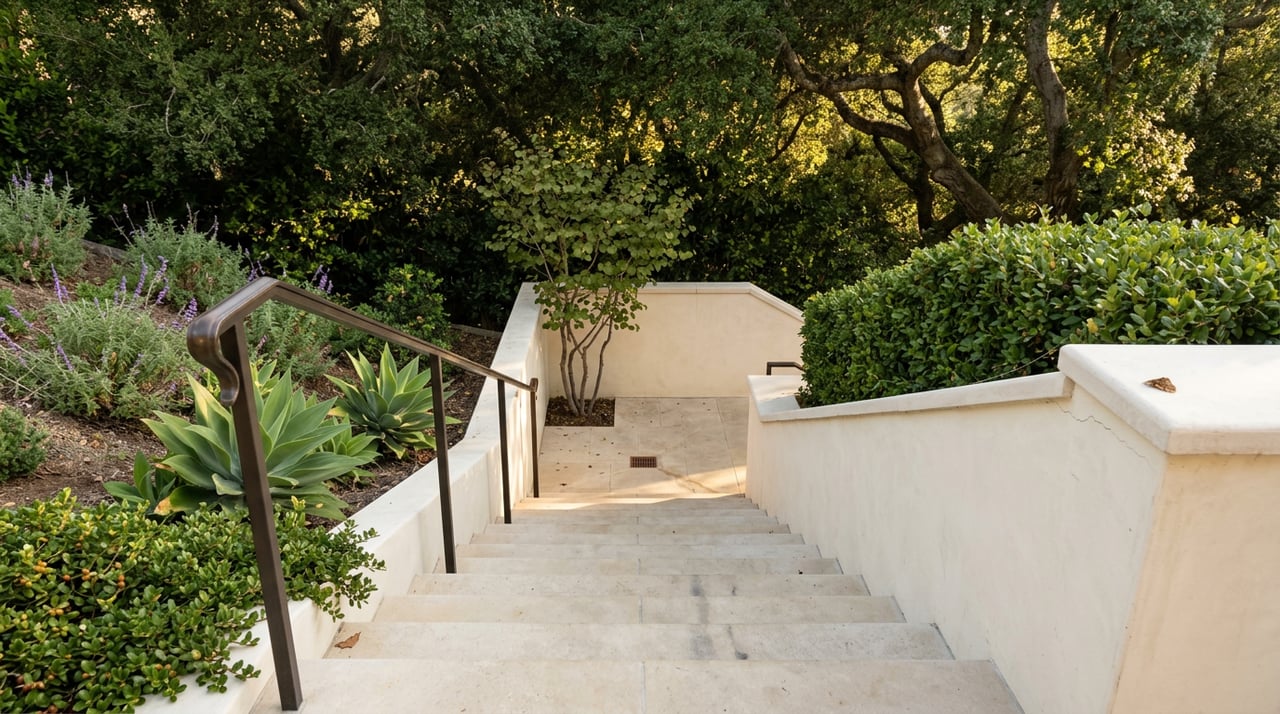
If you own a trophy home in Outpost Estates, you may want two things at once: privacy and a premium result. That tension is real, especially in a neighborhood where architecture, history, and setting often matter as much as square footage. The good news is that discreet selling can be done thoughtfully, strategically, and within California and CRMLS rules. Let’s look at what a smart private sale plan can actually involve in Outpost Estates.
Why Outpost Estates Requires Nuance
Outpost Estates is not just another Hollywood Hills address. According to Los Angeles City Planning’s SurveyLA context statement, the tract was developed in the mid-1920s with a clear vision: a natural hillside setting, underground utilities, decorative streetscape elements, and strict building standards.
That origin story still shapes how buyers view the neighborhood today. SurveyLA also notes that Outpost Estates quickly became one of Hollywood’s most prestigious neighborhoods, with a strong early concentration of Spanish Colonial Revival and Mediterranean Revival homes. For sellers, that means your home’s narrative may carry real weight in the market.
This matters because many buyers at this level are not simply comparing finishes or bedroom counts. They are often responding to provenance, architectural style, siting, and the way a home fits into the larger character of Outpost Estates.
What the Market Suggests Right Now
The broader 90068 market shows strong values, but it does not point to a one-size-fits-all selling approach. Zillow places the average home value in 90068 at $1,652,986, with homes pending in about 33 days, while Redfin reports a median sale price of $1,736,484 and roughly 85 days on market over a recent three-month period.
Realtor.com reports a median listing price near $1.995 million with a 98% sale-to-list ratio in May 2026. It also places Outpost’s median listing price around $3.389 million, well above ZIP-level pricing. These figures are not directly interchangeable, but together they point to a premium submarket where pricing discipline and buyer targeting matter.
For a trophy home, that usually means broad exposure is not always the first move. It also means staying off-market indefinitely can carry risk if the right buyers never see the property.
What “Discreet” Really Means
In luxury real estate, privacy often gets talked about loosely. In practice, discreet selling is best understood as controlled exposure, not invisible marketing.
Under current policy, a private strategy still has rules. NAR states that Clear Cooperation requires a broker to submit an exclusive listing to the MLS within one business day after public marketing, and CRMLS states that public marketing of an exclusive listing triggers MLS submission within one business day as well.
That means discreet does not mean exempt. If a listing is publicly marketed, the clock starts.
When Office-Exclusive Can Work
A true private launch often depends on using an office-exclusive approach correctly. NAR’s March 2026 guidance says office-exclusive exempt listings require a seller-signed disclosure confirming that the seller is choosing to waive or delay MLS benefits and not publicly market the property.
CRMLS also states that office-exclusive listings may be communicated internally to the brokerage’s own clients if agency disclosure is already in place. That can create a narrow, controlled path for introducing a property without opening the door to full public exposure from day one.
For a high-profile seller, this can be appealing. It allows initial outreach to be selective, measured, and aligned with privacy goals.
What Can Trigger MLS Submission
This is where many sellers need clarity. CRMLS says that a yard sign counts as marketing and can trigger filing requirements.
So if your goal is a truly private launch, the plan usually requires no public marketing at all during that first phase. That often means no sign, no public website push, and no broad social promotion.
CRMLS also notes that inspections themselves are not limited by Clear Cooperation. In other words, private preparation and buyer diligence can still move forward, but public-facing promotion changes the compliance picture quickly.
Why a Phased Launch Often Makes Sense
For many Outpost Estates trophy homes, the strongest path is not fully private forever or fully public immediately. It is a phased approach.
A quiet launch can test demand among qualified buyers first. If the best offer surfaces early, you may preserve privacy and still achieve a strong result.
If it does not, you retain the option to widen exposure later with a more public campaign. Given the mixed timing signals in the 90068 data, that kind of disciplined sequencing can be more effective than guessing wrong on either extreme.
Pricing Matters More in a Private Sale
When exposure is limited, pricing becomes even more important. You have fewer chances to create urgency, fewer buyers seeing the home at once, and less room for the market to correct an overly ambitious list price.
That is especially true in Outpost Estates, where the neighborhood story is powerful but each property can be highly individualized. Architecture, view orientation, lot position, privacy, original details, and condition can all shape value in ways that broader ZIP-code averages cannot fully capture.
A trophy property needs a pricing strategy that reflects the micro-market, not just the wider Hollywood Hills map. In a discreet sale, precision is part of the marketing.
Disclosures Still Apply in Private Sales
Privacy does not reduce disclosure obligations. In California, the statutory disclosure framework still applies whether a home launches publicly or privately.
Civil Code 1102.6 requires the Real Estate Transfer Disclosure Statement for residential transfers. California DRE guidance also says the seller’s agent and any cooperating agent must conduct a reasonably competent and diligent visual inspection and disclose material facts that affect value, desirability, and intended use.
That inspection does not require off-site investigation or public-records research absent special circumstances, and it does not extend to areas that are not reasonably accessible. Still, for a high-value property, careful preparation before launch is essential.
Natural Hazard and Wildfire Review
Civil Code 1103 adds the Natural Hazard Disclosure Statement. In hillside areas like Outpost Estates, wildfire exposure is often a meaningful part of buyer diligence.
Los Angeles County provides a parcel-level GIS viewer that allows fire hazard severity zone status to be checked by address or APN. County guidance explains that these zones are based on factors such as fuels, fire history, terrain, and weather.
California Civil Code 1102.6f also requires an additional wildfire notice when a property is in a high or very high fire hazard severity zone and the home was built before January 1, 2010. That notice includes information related to low-cost retrofits and ember-vulnerable features.
Because many Outpost Estates homes date to the 1920s, this review can be especially relevant before the property is introduced to buyers.
Older Homes May Require Lead Disclosure
Age and architectural pedigree can be selling strengths in Outpost Estates. They can also come with added compliance steps.
If a home was built before 1978, the federal lead-based paint disclosure rule may apply. That requires sellers and agents to disclose known lead hazards, provide the required EPA pamphlet and related records, and offer a 10-day inspection opportunity before contract signing.
For older luxury homes, this is one more reason preparation matters. A discreet sale still needs a complete and organized diligence package.
Historic Status Should Be Checked Early
Historic-resource questions can affect both listing preparation and buyer expectations. Los Angeles City Planning states that property owners can verify designation in ZIMAS.
If a property is designated historic, projects may be reviewed for conformance with the Secretary of the Interior’s Standards. City Planning also notes that properties in an HPOZ may face additional review for exterior work, including landscaping, alterations, additions, and new construction.
For sellers, this matters before making cosmetic improvements or describing future remodel potential. It is wise to confirm what applies to the property before launch, not after buyer questions begin.
Mills Act Status Can Affect Buyer Diligence
If the property has a Mills Act contract, that should be verified early as well. Los Angeles City Planning states that a Mills Act contract transfers with the property when it is sold.
That can shape buyer expectations around ongoing obligations and tax-related diligence. In a discreet sale, surprises can cost momentum, so this is the kind of detail worth clarifying upfront.
What Sellers Should Expect From Their Advisor
Selling a trophy home quietly is not just about who knows wealthy buyers. It is about who can manage privacy, timing, positioning, and compliance at the same time.
In Outpost Estates, that means working with an advisor who understands the Hollywood Hills micro-market, can speak credibly about architectural significance, knows when office-exclusive makes sense, and can pivot to broader luxury distribution if the market calls for it.
It also means having a launch plan that accounts for wildfire-zone review, statutory disclosures, historic-resource checks, and the exact point at which public marketing changes the MLS requirements. In this niche, stewardship is part of the service.
How to Prepare for a Discreet Sale
If you are considering a private or semi-private launch, start with a plan instead of a guess. A strong preparation process often includes:
- Reviewing pricing against current Outpost Estates and 90068 market conditions
- Confirming whether the property may benefit from a short private preview period
- Determining whether office-exclusive is appropriate for your goals
- Avoiding public marketing if privacy is the top priority at launch
- Completing disclosure and inspection preparation early
- Checking fire hazard severity zone status by parcel
- Verifying historic designation in ZIMAS when relevant
- Confirming whether a Mills Act contract applies
- Organizing property story, architecture, and provenance before buyer outreach
The key is balance. You want to protect privacy without losing the momentum and leverage that often produce a premium outcome.
If you are weighing whether to privately launch, selectively market, or fully expose a trophy home in Outpost Estates, the right strategy starts with the property itself. A home with architectural pedigree, historic considerations, or a unique buyer pool deserves a plan built around nuance, not a generic listing template. If you want thoughtful guidance on timing, positioning, and discreet sale management in the Hollywood Hills, connect with Neal Baddin.
FAQs
What does discreetly selling a home in Outpost Estates mean?
- It usually means controlling exposure through a private or limited launch strategy, rather than publicly marketing the home from day one.
Can an Outpost Estates home be sold privately without going on the MLS?
- Possibly, but only if the listing remains truly non-public and follows office-exclusive rules, including the required seller-signed disclosure.
What counts as public marketing for a luxury home in CRMLS?
- CRMLS states that public marketing triggers MLS submission requirements, and even a yard sign counts as marketing.
Do California disclosure rules still apply to a private sale in Outpost Estates?
- Yes, private sales still require the applicable California disclosures, including the Real Estate Transfer Disclosure Statement and Natural Hazard Disclosure Statement.
Why is wildfire review important for Outpost Estates sellers?
- Outpost Estates is a hillside area, and fire hazard severity zone status can affect required disclosures and buyer diligence.
Should sellers check historic status before listing a home in Outpost Estates?
- Yes, Los Angeles City Planning says owners can verify designation in ZIMAS, and historic status may affect repairs, exterior work, and buyer expectations about future changes.
Can a Mills Act contract affect the sale of an Outpost Estates property?
- Yes, Los Angeles City Planning states that a Mills Act contract transfers with the property, so it should be verified early in the sale process.