Two ridge houses come to market the same week. Same list price, same square footage, same view corridor, one built in 1962 and one rebuilt in 2019. On paper the buyer is choosing between them on taste. In 2026, the buyer is actually choosing between two very different annual carrying costs, and the gap is being set by an underwriter in another building who has never seen either driveway.
That gap is the story of this market right now. It is not on the MLS sheet. It surfaces the week after the offer is accepted, when the insurance quotes come back and one property suddenly costs $10,000 a year more to own than the other. The Mulholland Scenic Parkway corridor and the Woodrow Wilson spine sit inside it entirely, and understanding how the number is built is the single most useful piece of due diligence a buyer can do before writing.
The number that reprices the offer
Los Angeles homeowners insurance averages about $2,100 a year in 2026 across the city. On the ridge, that number is not the number. Recent 2026 market analysis puts typical premiums for hillside VHFHSZ properties at $8,000 to $15,000 a year, with fully coastal WUI estates running higher.
Read that as a price adjustment. On an $800,000 mortgage at current rates, adding $12,000 a year of insurance is the same monthly burden as taking on roughly $158,000 of additional principal. The list price you see is not the price you carry. That reframe is what every serious ridge buyer is now working through before the inspection contingency closes.
Where the ridge sits on the map that matters
Every parcel along Mulholland Drive between Cahuenga Pass and the 405, and every parcel branching off Woodrow Wilson Drive, sits inside the City of Los Angeles Very High Fire Hazard Severity Zone. The VHFHSZ is not a scoring system that ranks one house against another. It is a binary designation, and being inside it triggers three things that reprice the property at once:
- Mandatory annual LAFD defensible space inspection, scheduled May 1 through June 30, 2026
- Brush clearance extending 200 feet from the structure under LAMC Section 57.1.603.5, not the 100 feet used elsewhere in California
- A carrier appetite that ranges from cautious to closed, depending on the specific ZIP and access geometry
Buyers reading portal descriptions do not see any of this. They see "hillside privacy" and "canyon setting." The underwriter sees a parcel identifier and a fire-hazard overlay.
The two-policy default no one mentions at the open house
State Farm stopped accepting new California property applications on May 27, 2023. Allstate paused its new business in the state before that. Both were, and remain, the carriers most likely to have written the previous owner's policy. When they leave, the replacement usually is not one policy. It is two.
The California FAIR Plan is the state-backed insurer of last resort. Its residential policy covers fire, lightning, and smoke, caps out at $3 million in dwelling coverage, and excludes water damage, theft, and liability. A Difference in Conditions policy from a private carrier wraps around the FAIR Plan to restore what standard coverage would have included. That two-policy stack has become the operating default on the ridge, not the exception. The Sustainable Insurance Strategy, effective January 2026, requires carriers to use forward-looking catastrophe models in rate filings, which is expected to gradually draw admitted carriers back. In the meantime, surplus lines homeowners transactions rose 119% in the first half of 2025 over the prior year, a market signal that plenty of ridge buyers are landing in the non-admitted market to close.
Commissioner Ricardo Lara and Assemblymember Lisa Calderon introduced the Make It FAIR Act (AB 1680) in 2026 to add a comprehensive homeowners option to the FAIR Plan itself and to reform claims handling. If enacted, the two-policy stack could compress into one. Buyers writing offers this summer should assume the current structure applies to their transaction.
The May 1 inspection that becomes an escrow document
The LAFD brush inspection is a compliance program, not a real-estate program, but it functions as an escrow document in practice. A property that fails its initial inspection is billed $31, then re-inspected. If it fails again, the city can send contractors to clear the parcel and back-charge the owner a $1,740 administrative fee plus the contractor's lowest bid, with a 200% penalty for late payment.
Underwriters look at recent compliance history. A parcel with an unresolved notice of non-compliance is harder to bind, and the disclosure package the seller hands the buyer should include the current LAFD status. The 2026 mailer flags hazardous vegetation the ridge is full of by default: palms, eucalyptus, acacia, juniper, cypress, oleander, and pampas grass. A canonical Mulholland front garden planted in the 1990s can carry three of those species at the property line. The compliance work is the work; the paperwork is the evidence of it.
Zone 0: the rule that isn't a rule yet
California Assembly Bill 3074, passed in 2020, directed the Board of Forestry and Fire Protection to establish an ember-resistant "Zone 0" covering the first five feet around a structure, including attached decks and stairs. Six years on, the state-level Zone 0 rules remain unadopted and are not enforced by LAFD as part of the 2026 inspection cycle. San Diego has begun encouraging voluntary Zone 0 readiness with a February 2027 target.
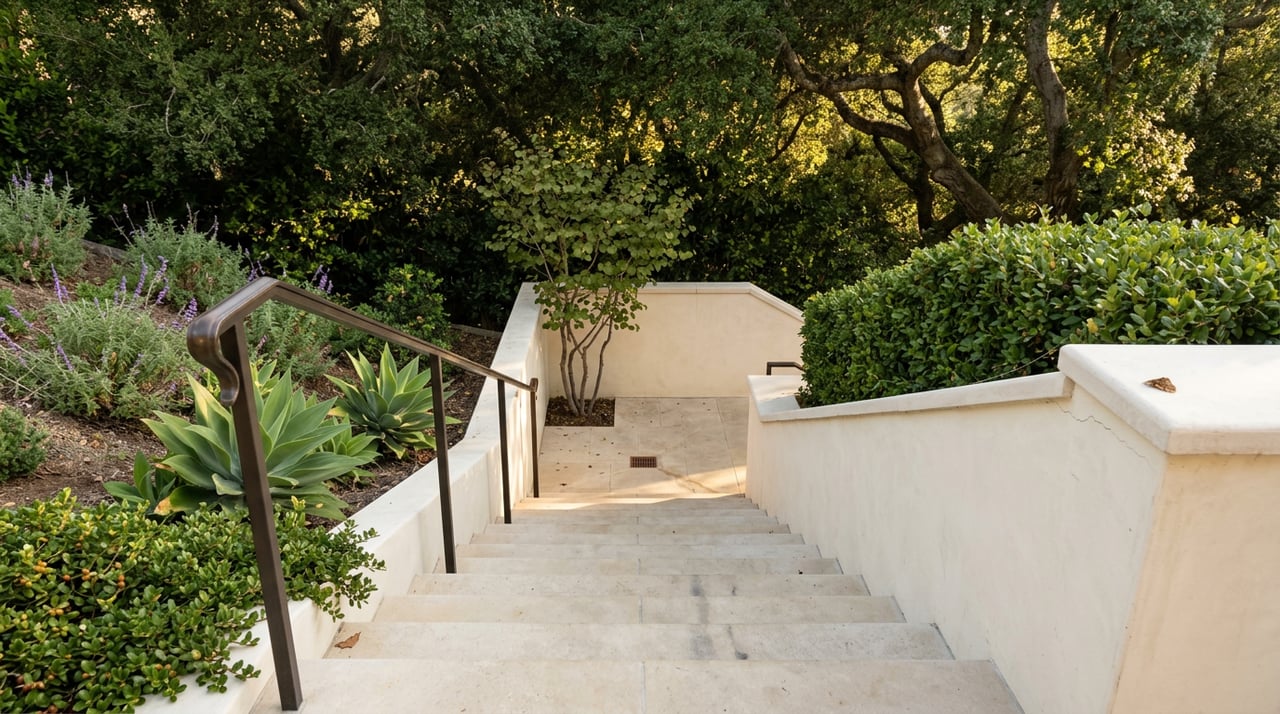
Buyers should treat Zone 0 as underwriting-live even though it is regulation-pending. Carriers writing new California business under the January 2026 catastrophe-model rules are already pricing for it. Wood chip mulch touching the foundation, a wooden stair landing at the entry, a queen palm within arm's reach of a bedroom window, and stacked firewood against the garage all sit inside a five-foot line an inspector will eventually be measuring. The premium impact of curing those items in advance shows up as a discount today.
What actually moves the premium
The variables that separate an $8,000 policy from a $15,000 policy on two otherwise comparable ridge homes are specific, and none of them are subjective.
| Property attribute | Underwriting effect |
|---|---|
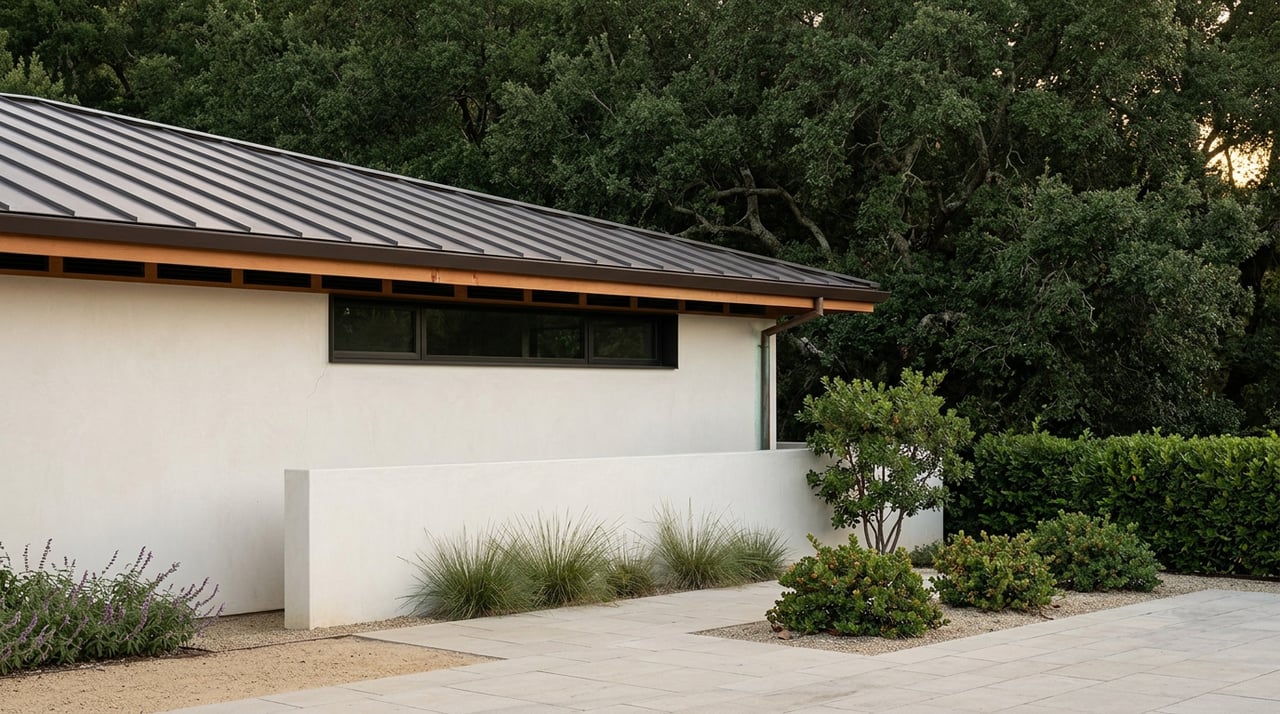
| Class A fire-rated roof (concrete tile, standing-seam metal, composition) | Meaningful discount, often a prerequisite for admitted-market interest |
| Ember-resistant attic and eave vents | Required by several carriers as a condition of new coverage |
| Multi-pane tempered windows on the downslope elevation | Reduces radiant-heat vulnerability, discounted by hardening credits |
| Driveway width and turnaround for fire apparatus | Narrow, single-track approaches limit carrier appetite outright |
| Combustible fencing tied into the structure | Extends the ignition envelope, priced accordingly |
| Recent LAFD non-compliance history | Delays binding, sometimes forces surplus-lines placement |
| Five-foot perimeter free of mulch, palms, and stored fuel | Positions the parcel for future Zone 0 compliance without retrofit cost |
The Safer from Wildfires framework and the FAIR Plan's own hardening discounts recognize these categories directly. Some carriers offer 10 to 20 percent premium reductions for a documented stack of these features. Others will only write coverage at all if the stack is present.
How to run the insurance test before you write the offer
- Pull the parcel's brush-compliance status through LAFD's FIMS portal using the APN before touring a second time.
- Ask the listing side for the current declarations page. A FAIR Plan + DIC combination on the seller's policy tells you what the market has already decided about this address.
- Request binder quotes from two admitted carriers and one surplus-lines broker before removing the inspection contingency. The quotes double as a hardening audit.
- Price the delta. If the annual insurance line is more than one percent of the purchase price, treat it as a negotiation input, not a closing cost.
- Reserve budget for the hardening work the binder conditions on. Ember-resistant vent replacement, a Class A roof section, and Zone 0 clearing are all discretionary until the underwriter says they are not.
Frequently asked
Does the Mulholland Scenic Parkway Specific Plan design review complicate insurance-driven hardening? It can. Exterior changes visible from Mulholland fall inside the corridor's design review process. Metal roofing selections, vent covers, and hedge removal for defensible space each need to be sequenced with the review, which is one reason to identify hardening work during due diligence rather than after close.
Is a FAIR Plan policy a red flag on a listing? No. On the ridge in 2026 it is closer to a default. What matters is whether the DIC wrap is in place, what the combined premium is, and whether the property could qualify for the admitted market with modest hardening.
Will the Sustainable Insurance Strategy meaningfully lower ridge premiums this year? The framework is designed to bring admitted carriers back over time, not immediately. Buyers closing in 2026 should underwrite to current conditions and treat any future softening as upside.
What about earthquake coverage? Separate policy, separate underwriter, separate decision. The California Earthquake Authority is the usual path. It does not affect the fire binder but does affect the total annual carrying cost of a ridge home, and it belongs in the same spreadsheet.
The buyers who close cleanly on Mulholland and Woodrow Wilson this year are the ones who solved the insurance line before the appraisal, not after. If you are weighing a specific address on the ridge and want a candid read on how the market is currently pricing its hardening profile, Neal Baddin works this corridor daily and can help you translate the binder into a purchase strategy. Request Your Instant Home Valuation to open the conversation.