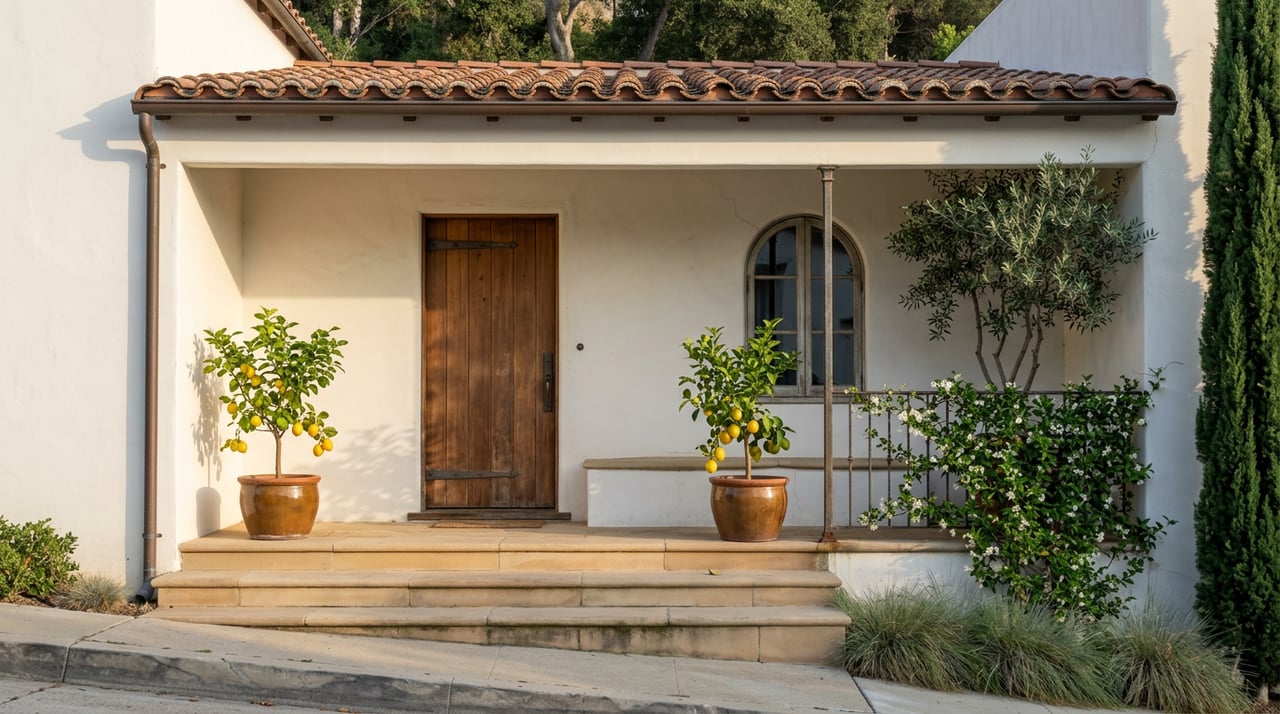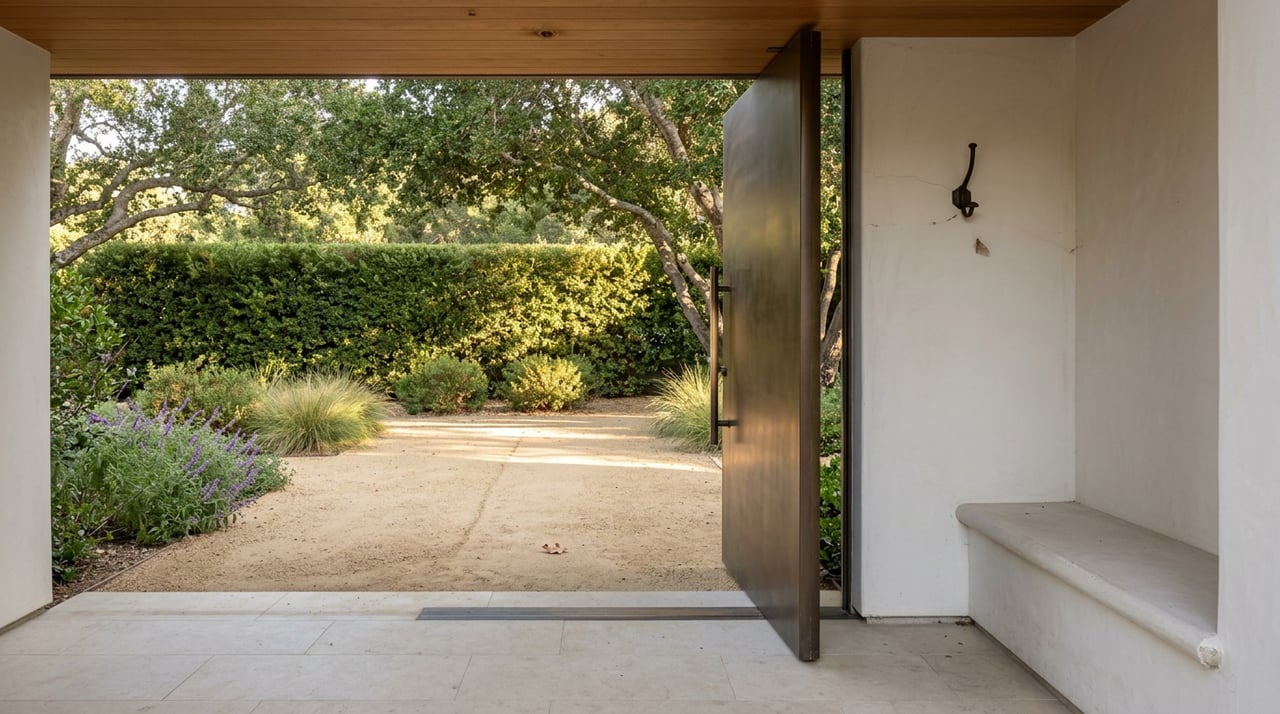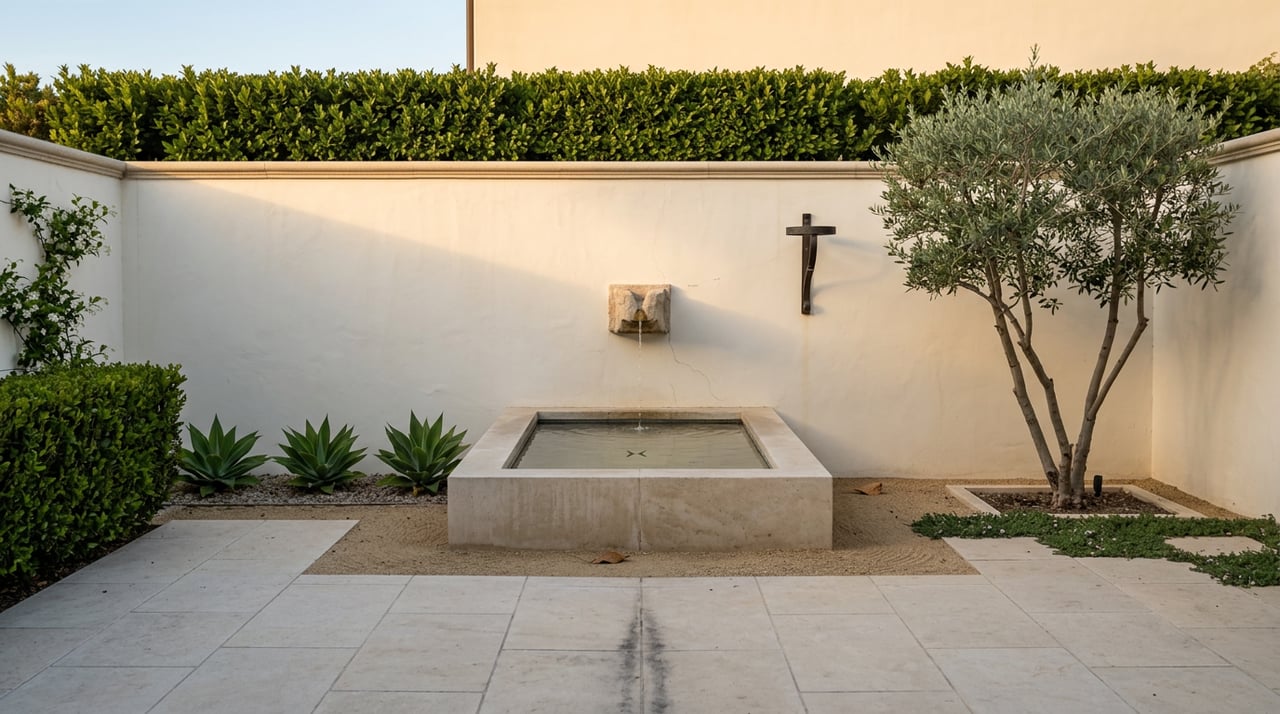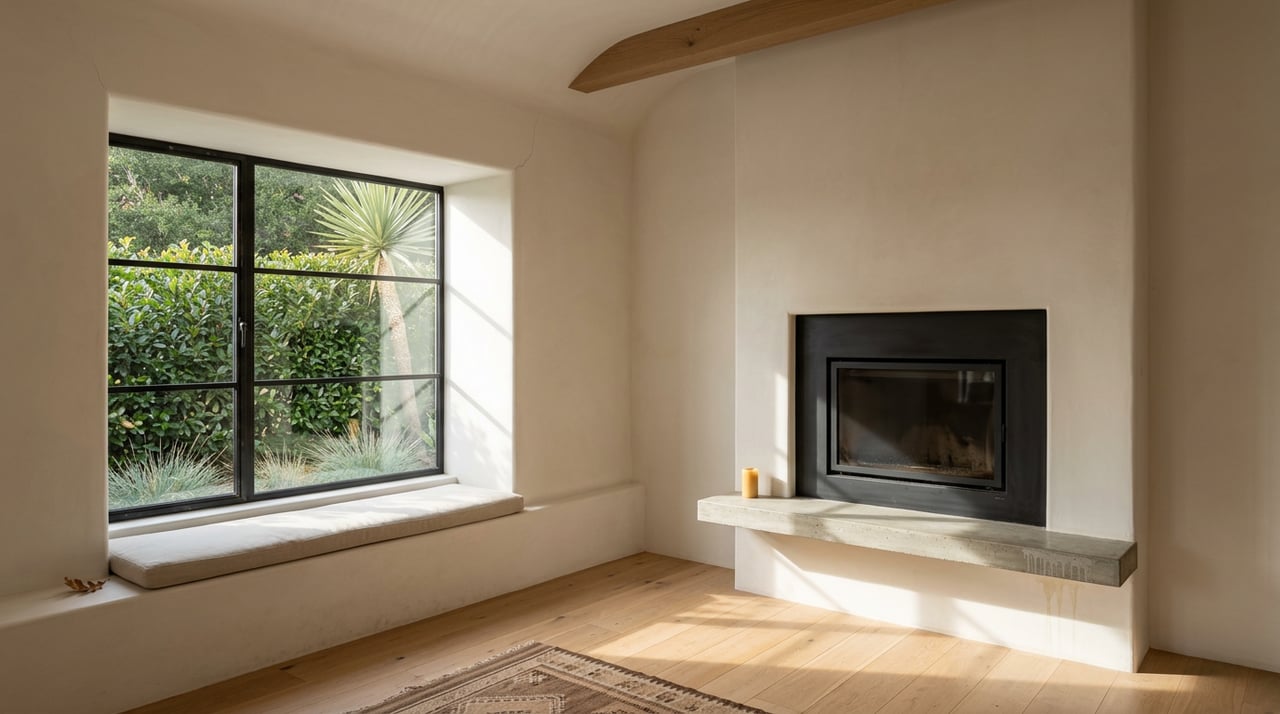
In October 2025, the longtime home of filmmaker John Cassavetes and actress Gena Rowlands sold for the first time in more than sixty years. The property sits on nearly an acre along Woodrow Wilson Drive, spread across three contiguous parcels, the kind of hillside assembly that let a mid-century family buy small and grow their footprint one adjoining lot at a time. It sold for $4,375,000.
That number is not a coincidence of taste or timing. It is $925,000 under the transfer-tax threshold that was in effect the month the sale closed. Walk the rest of Woodrow Wilson Drive, a street real estate marketing has nicknamed Celebrity Row for the roster of entertainment names who have owned homes there, and the same pattern shows up again and again: sale after sale, listing after listing, stopping just short of a specific number. That number moved this year. Understanding why it moved, and why so many prices on this one street seem to respect it, tells you more about what a Woodrow Wilson home is actually worth than the sale price alone ever will.
The Line the City Drew, and Redrew, This Summer
The number in question belongs to Measure ULA, the City of Los Angeles transfer tax voters approved in 2022 and that people in this business mostly call the mansion tax. It applies to any sale of real property inside city limits, adds on top of the standard transfer tax, and is recalculated every July using the Chained Consumer Price Index.
For sales that closed before July 1, 2026, the first tier kicked in at $5.3 million, taxed at 4 percent, with a second tier above $10.6 million taxed at 5.5 percent. Since July 1, those thresholds moved to $5.4 million and $10.9 million, per the Los Angeles Office of Finance. The rate structure did not change. The line just shifted a little higher.
Here is the detail that matters for anyone comparing homes rather than reading a headline number: the tax is calculated on the full sale price, not on profit. A family that bought a Hollywood Hills lot in the 1950s for a few thousand dollars and sells today for $5.5 million owes the same 4 percent on that gross figure as an investor who bought and flipped the same house last year for a $50,000 gain. Basis, holding period, and appreciation do not enter the calculation at all. That single design choice is why the threshold behaves less like a tax bracket and more like a cliff.
| Before July 1, 2026 | After July 1, 2026 | |
|---|---|---|
| First tier | $5,300,000 at 4% | $5,400,000 at 4% |
| Second tier | $10,600,000 at 5.5% | $10,900,000 at 5.5% |
A 2025 analysis from UCLA's Lewis Center for Regional Policy Studies found that since the tax took effect, the odds of a Los Angeles property selling for more than $5 million dropped by roughly 55 percent. That is not a small statistical wrinkle. It is a documented change in seller behavior across the city, and Woodrow Wilson Drive gives you a chance to see it on a single, walkable street rather than in an aggregate chart.
Walking the Street's Actual Numbers
Pull the recent activity on Woodrow Wilson Drive and a shape emerges before you even look for one. A three-bedroom sold for $1,350,000 in July 2025. Another closed at $1,925,000 in May 2026. A renovated mid-century home is currently listed at $2,499,000. A compound with a main house, a lower casita, and an upper studio has been on the market at $3,899,000. The Cassavetes and Rowlands estate closed at $4,375,000. Every one of those numbers sits comfortably under the current $5.4 million line.
Then there is the outlier: a gated, one-acre compound on the street currently priced at $5,995,000, one of the few Woodrow Wilson listings priced meaningfully into the taxed tier rather than up against it.
Six data points on one street is not a study. But the shape matches the citywide finding closely enough to be worth naming out loud. Five of six recent Woodrow Wilson transactions sit below the threshold entirely. Only one sits clearly above it. If you are shopping this street by price alone and treating every number as a pure signal of square footage, view, and finish quality, you are missing the part of the number that has nothing to do with the house.
Why a Street Like This One Feels the Cliff More
Two features of Woodrow Wilson Drive make the threshold bite harder here than it does on a flatter, more homogenous block.
The first is tenure. This is a street where families stay. The Cassavetes and Rowlands home changed hands for the first time in six decades. A street with that kind of holding pattern is a street where sellers are sitting on decades of appreciation, which means the gross-price design of the tax hits them at close to its maximum force. There is no capital-gains-style offset waiting for them at closing. The tax is calculated on what the buyer pays, full stop, regardless of what the seller originally paid or how long ago.
The second is parcel structure. Hillside lots in this part of the Hollywood Hills were frequently platted small, and estates on Woodrow Wilson Drive have a long history of being assembled from adjoining legal parcels rather than built on a single large lot from the start. The Cassavetes property is a clean example: three contiguous parcels conveyed as one estate. Critics of Measure ULA, including the Howard Jarvis Taxpayers Association, have pointed to a broader concern that owners facing the threshold sometimes look for structures that avoid recording a single sale above the line. On a street where multi-parcel ownership is already the norm rather than the exception, that structural flexibility is simply part of the terrain a seller and their advisors have to think through, whether or not any specific transaction uses it.
Neither of these facts changes what the house is worth to live in. Both change what it costs to sell.
The Reform Fight That Could Move the Line Again
The threshold has already changed once this year, and there is a live argument in Los Angeles about whether it should change further. In January 2026, City Councilmember Nithya Raman proposed placing amendments on the June ballot, including a 15-year exemption for new multifamily and commercial construction and hardship relief for owners affected by the January 2025 Palisades fire. The council declined to move that proposal forward.
Separately, a statewide ballot effort backed by the Howard Jarvis Taxpayers Association had targeted the November 2026 ballot with a measure that would have capped local transfer taxes below Measure ULA's level. Negotiations in Sacramento led that group to pull the measure this summer in exchange for a different statewide proposition that raises the vote threshold for future local special taxes, rather than rolling back the one already on the books.
The practical takeaway for anyone pricing or comparing Woodrow Wilson properties in the second half of 2026: nothing currently pending would lower the $5.4 million line before your escrow closes. Price against the number that exists today, not the number some future ballot measure might create.
Three Questions Worth Running Before You Write an Offer
- Where does this specific number sit relative to $5.4 million and $10.9 million? A price $50,000 above the line and a price $50,000 below it can produce a six-figure swing in what the seller actually nets, even if the properties are otherwise comparable.
- Is the property held on a single parcel or several? Multi-parcel estates, common on this street, sometimes carry more flexibility in how a transaction is structured. That flexibility is worth understanding before you anchor to a listing price as if it were fixed.
- How long has the seller held the property? A long hold means the tax is landing on decades of appreciation with no basis offset. That context often explains why a seller is unusually firm on a number that sits just under the threshold rather than a few hundred thousand dollars above it, where the math changes for them substantially.
Frequently Asked Questions
Does Measure ULA apply to homes just off Woodrow Wilson Drive in Beverly Hills or West Hollywood? No. The tax applies only to sales inside City of Los Angeles limits. Beverly Hills and West Hollywood are separate incorporated cities and set their own transfer tax rules.
Does inheriting a Woodrow Wilson property trigger the tax? Not on its own. The tax applies when a property is conveyed for consideration. Inheriting and holding a property does not trigger it. A later sale by the estate does, calculated on that sale's price.
Is the tax based on profit or on the full sale price? The full sale price. A property that sells for less than the owner originally paid can still generate a significant tax bill, since there is no offset for basis or holding costs built into the calculation.
If you are trying to make sense of what a specific Woodrow Wilson or Mulholland corridor address is actually worth, and where a listing price sits relative to a tax threshold that just moved, that is exactly the kind of read a general market report will not give you. Neal Baddin works this street and the canyons around it every week. Request Your Instant Home Valuation to see where your number actually falls.